Natural History Habitats Habitats - Mountains
Habitats - Mountains
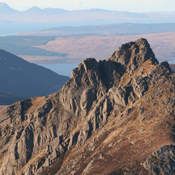
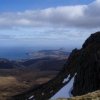
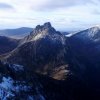
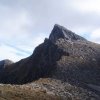
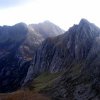
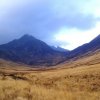
Arran’s mountains are some of the most dramatic to be found anywhere in Scotland. The mountains are a great place to see red deer, red grouse, meadow pipits, kestrels, peregrines and ravens.
Characteristics
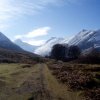
Arran’s mountains are some of the most dramatic to be found anywhere in Scotland and were formed by a large volcano active about 60 million years ago. Over time erosion and glacial action eroded away softer rocks on the exterior of the volcano and exposed the hard granite core of the volcano’s magma chamber. During the ice age, glaciers carved out the deep glens and left jagged ridges of harder rock upstanding. The mountains are exposed to the full force of the maritime weather regimes that are typical of the west of Scotland. Above about 500m it is often extremely windy, cold and wet. Vegetation tends to be specialist, low growing, able to endure extremes of weather and is typified by highly adapted mosses, lichens, grasses and short woody shrubs such as heather, blaeberry and crowberry.
Where
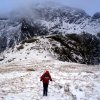
All the high ground above 500m is to be found in the north of Arran. Glen Rosa can be accessed from Brodick, and there is a good path to the summit of Goatfell from Cladach. Please be aware if heading in to the mountains that the weather is very changeable. The conditions on the summits can be appalling while it is still a fine day at sea level. It is absolutely essential to be properly clothed and equipped with a map and compass. It is also a good idea to leave information about your route with someone else.
Species Highlights
Many of the birds and mammals found in the moorland areas are also to be found in the higher zones. The mountains are a great place to see red deer, red grouse, meadow pipits, kestrels, peregrines and ravens. In the past, Arran has also been home to a small population of ptarmigan, but recent sightings have been few. Other important mountain species include golden eagles, and an interesting creeping form of juniper.
When Highlights
In the winter months the mountain peaks are often cloaked in snow for days or even weeks at a time, and freezing conditions can be expected at any time between October and April. Ravens begin displaying as early as January and eagles in late February. By late April the fresh vegetation growth begins to turn the high tops green. The ling heather comes in to bloom in August, and it is also around this time that the blaeberries come in to fruit. From August, young eagles are fledging and this can be a great time to view them. By October, the hills are carpeted in orange and the hills ring with the sound of the red deer rut.